

If you’ve ever dug into the world of micro fluid handling—whether for industrial processes, medical devices, or emerging tech like EV thermal management—you’ve probably run across two common types of high-pressure micro gear pumps: internal and external. As a supplier specializing in Micro Gear Pump High Pressure, I get asked this question all the time: what sets them apart, and which one is right for your application? Let’s break this down clearly, no overly technical jargon, just the real-world differences that matter when you’re shopping for reliable high-pressure micro pumps.
First, let’s start with the basics of how micro gear pumps work in general. Unlike centrifugal pumps that push fluid with spinning blades, gear pumps use two interlocking gears—one driving, one driven—to trap fluid in the spaces between their teeth, move it around the pump housing, and push it out under pressure. This positive displacement design is why they’re so popular for high-pressure applications: they deliver a consistent, fixed volume of fluid with each rotation, no matter fluctuations in inlet pressure, which makes them ideal for precision metering or steady high-flow demands. Now, when you shrink that design down to micro size (think pumps small enough to fit in handheld medical devices or EV charger cooling systems), the internal vs. external distinction becomes even more critical.
The Core Design Difference That Changes Everything
The biggest split between internal and external high-pressure micro gear pumps comes down to how those two interlocking gears are shaped and arranged. External gear pumps have two identical, straight-cut gears sitting side-by-side in the same plane. Each gear has external teeth, so when they spin in opposite directions, their teeth mesh tightly to trap fluid between the teeth and the pump’s inner housing wall. As the gears turn, the fluid is carried from the inlet port (where it’s drawn into the pump) around the outer edges of the gears, and squeezed out the outlet port at high pressure as the meshing teeth trap it on the outlet side.
Internal gear pumps, by contrast, have two gears of different sizes: a large internal gear (sometimes called a ring gear, with teeth cut on its inner surface) and a smaller external drive gear that sits off-center inside the internal gear. A small crescent-shaped spacer sits between the two gears, sealing the gap between the inlet and outlet ports so fluid doesn’t leak backward. As the drive gear spins, it turns the internal gear, and fluid gets trapped in the expanding gaps between the gear teeth on the inlet side, carried around inside the internal gear, and pushed out the outlet side as the teeth mesh on the opposite side.
This tiny design tweak might not sound like much, but it ripples through every performance metric that matters for micro high-pressure pumps. Let’s dive into the key areas where they differ.
Pressure Handling Capabilities
For high-pressure applications, this is the first thing engineers check. External gear pumps have simpler, more straightforward gear geometry, which means the pressure they can handle depends heavily on the gap between the gear teeth and the housing, and how tightly they mesh. Because the gears are external, the load from high pressure pushes the gears apart slightly at the outlet side, which can create small gaps that lead to a bit of internal leakage—especially in micro-sized pumps, where tiny gaps make a big difference. That said, modern precision machining has pushed external micro gear pumps to handle pressures up to around 100 bar for small, continuous-duty runs, making them suitable for applications where pressure needs are solid but not extreme.
Internal gear pumps, on the other hand, distribute pressure loads more evenly across the gear teeth and the internal housing. The off-center arrangement and internal gear design mean pressure is contained within the ring gear, so there’s less tendency for the gears to separate under high load. Our team at Micro Gear Pump High Pressure has engineered internal micro gear pumps that consistently handle pressures up to 150 bar, with minimal internal leakage even at that upper range. That makes internal gear pumps the go-to choice for applications like high-pressure spray systems or precise fluid injection where sustained extreme pressure is non-negotiable.
Flow Rate and Precision (Critical for Micro Applications)
Micro pumps are used for tiny, precise fluid volumes—think dosing small amounts of reagents in medical analyzers, or circulating coolant in compact EV chargers. That’s where flow rate consistency and metering accuracy matter more than just raw flow speed. External gear pumps tend to have a linear flow rate relative to their rotation speed, which is easy to calibrate for basic applications. However, the small meshing gaps in micro external pumps can lead to slight flow variation at very low speeds, because even tiny leaks add up in small volumes. They’re also limited to flow rates roughly between 0.1 mL/min and 1 L/min for micro sizes, which covers a lot of common uses, but not all.
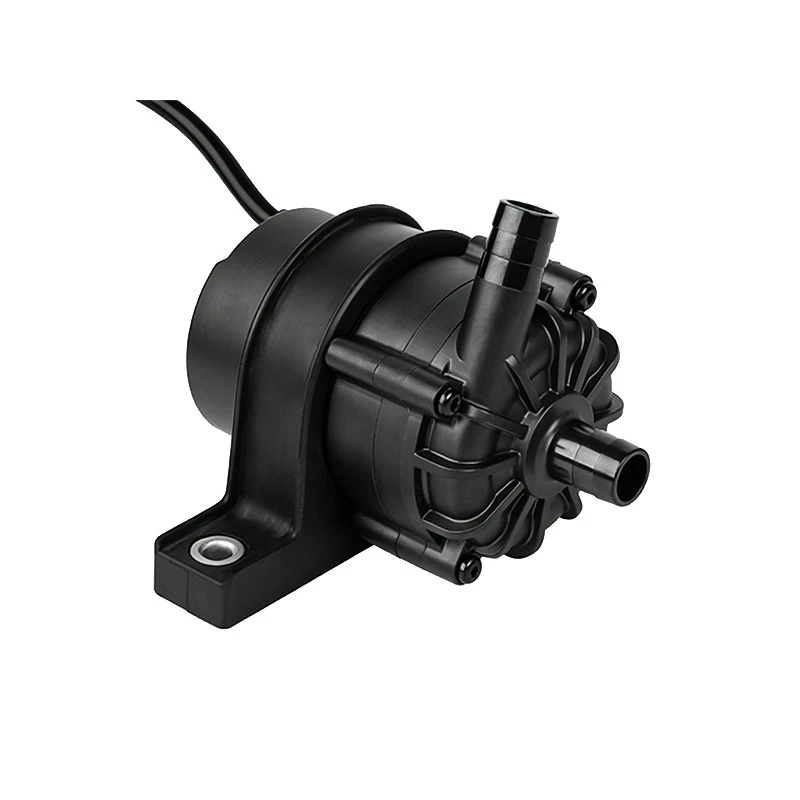
Internal gear pumps deliver much more consistent flow, even at low rotation speeds, because the crescent seal and internal gear arrangement eliminate nearly all of the cross-leakage that plagues external designs. That makes them far more accurate for metering applications—like the Precision Micro Gear Pump line we manufacture, which maintains flow accuracy within ±0.5% across a wide range of speeds. Flow rates for internal micro gear pumps range from as low as 0.05 mL/min up to 500 mL/min, making them ideal for applications that need both extreme pressure and tiny, precise volumes. For example, in the EV Charger Liquid Cooling Circulation Pump segment, where consistent coolant flow at controlled pressure is key to keeping chargers operating efficiently in hot conditions, internal gear pumps are the standard for reliable performance.
Vibration, Noise, and Suitability for Delicate Fluids
Another often-overlooked factor for micro pumps is how they interact with the fluid they’re moving. If you’re pumping sensitive fluids—like biological samples in lab equipment, or viscous chemicals—vibration and shear force from the pump can damage the fluid. External gear pumps have gears that mesh in a straight, linear pattern, which generates more pulsation as the teeth lock together and separate. This pulsation can create unwanted vibration, and for very delicate fluids, the shear at the meshing points can break down molecules or cause foaming. For micro pumps, where the internal components are tiny, this pulsation is amplified.
Internal gear pumps produce far less pulsation, because the gears mesh along a curved path rather than straight edges, smoothing out the fluid flow. The crescent seal also eliminates sharp pressure spikes at the meshing point, which reduces vibration and shear force. That makes internal gear pumps the better choice for pumping delicate or shear-sensitive fluids. External gear pumps work fine for less sensitive applications like water or basic oils, but if you’re handling something like pharmaceutical solutions or cell culture media, internal gear pumps will preserve the integrity of your fluid.
Durability and Maintenance
When you’re investing in micro pumps, you want something that will last, especially in industrial settings where downtime is costly. External gear pumps have a simpler design with fewer moving parts, which makes them easier to manufacture and repair in some cases. However, the meshing teeth on external gears wear faster because they’re exposed to more friction and pressure. Over time, the gaps between the teeth and housing widen, leading to increased leakage and reduced pressure performance. They also tend to require more regular lubrication, which can be a problem for applications that need oil-free operation (like medical devices).
Internal gear pumps, while slightly more complex in design, have a more even distribution of wear across the gear teeth, so they tend to last longer under high-pressure, continuous use. They can also be engineered for oil-free operation, which is a big plus for food, medical, or semiconductor applications where contamination from lubricants is a risk. That said, they can be more expensive to manufacture, which is something to factor in if cost is your primary concern.
Real-World Use Cases: When to Choose Which
Let’s tie this all together with specific examples of where each pump shines, to make your decision easier.
Choose an external high-pressure micro gear pump if:
- You need a cost-effective solution for moderate pressure (up to ~100 bar) and standard flow rates.
- Your application doesn’t require extreme metering precision at very low speeds.
- You’re pumping non-sensitive fluids like water, oils, or simple chemicals.
- Examples: Low-pressure spray systems, basic fluid transfer in industrial equipment, or low-volume cooling for small electronics.
Choose an internal high-pressure micro gear pump if:
- You need sustained high pressure (100–150 bar) and precise, consistent flow.
- You’re metering small, exact fluid volumes for applications like analytical instruments or medical dosing.
- You’re pumping delicate, shear-sensitive fluids or need oil-free operation.
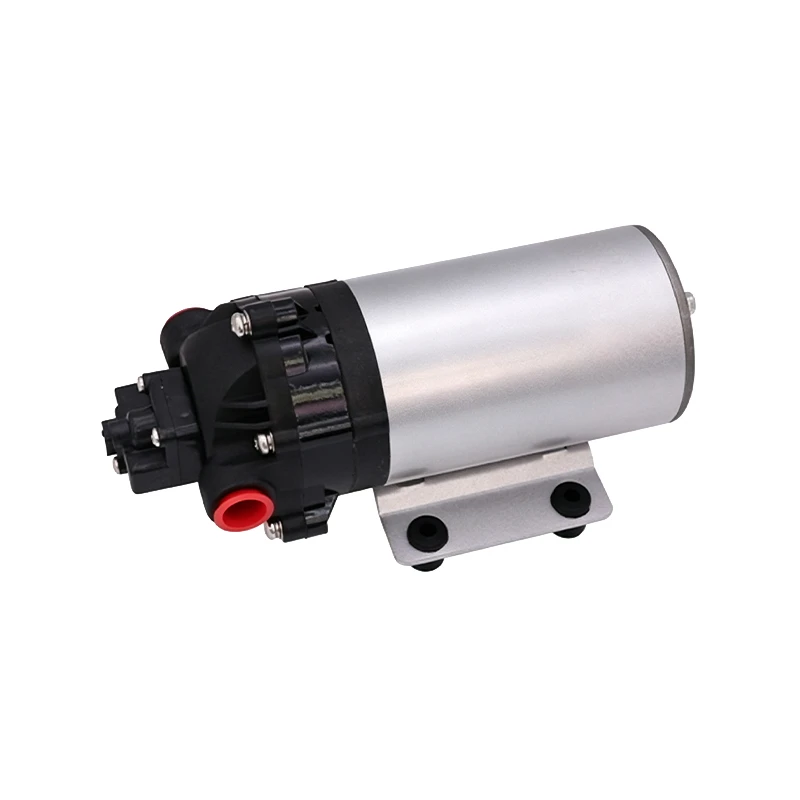
- Examples: Our Micro Gear Metering Pump line for lab automation, the EV Charger Liquid Cooling Circulation Pump series for high-performance EV components, or the Micro High‑Pressure Diaphragm Sprayer Pump for agricultural or industrial spray systems.
Wait, that last one is a good reminder: while gear pumps are common for high-pressure, some spray applications use diaphragm pumps, but as a specialized gear pump supplier, our gear-based spray pumps outperform diaphragm models for consistency and durability.
Common Misconceptions to Avoid
I’ve seen a lot of engineers mix these two up, so let’s clear up a couple of myths. First, people often think external gear pumps are only low-pressure, but modern machining has closed that gap—you can get external micro gear pumps at 100 bar, just not the sustained, consistent pressure of internal designs. Second, some assume internal gear pumps are always more expensive, but for applications where the precision and durability are worth the cost, the long-term savings from less downtime make them a better investment.
Another thing to note: both types of micro gear pumps require proper sizing for your application. Even the best internal gear pump won’t work if you pick the wrong flow rate or pressure rating. That’s why our team works directly with customers to match their needs to the right pump—whether they need an external model for a basic spray system or an internal model for a critical medical device.
Final Thoughts: Making the Right Choice
At the end of the day, the difference between internal and external high-pressure micro gear pumps boils down to your priority: moderate pressure at a lower cost, or extreme, consistent pressure and precision for sensitive or high-stakes applications. As a supplier focused on Micro Gear Pump High Pressure, we don’t push one type over the other—we help customers pick what works for their unique use case.
Whether you’re developing a new EV charger cooling system, a lab analytical instrument, or a high-pressure spray solution, our range of micro gear pumps (including the Precision Micro Gear Pump, Micro Gear Metering Pump, and Micro High‑Pressure Diaphragm Sprayer Pump) is built to meet the demands of modern fluid handling. If you’re not sure which pump is right for your project, our engineering team is here to help you navigate the details, from pressure requirements to flow accuracy to fluid compatibility. Reach out to us today to start your procurement conversation—we’re ready to partner with you to find the perfect micro gear pump for your needs.
References
- Fluid Power Society. (2021). Positive Displacement Pump Design and Application for Micro Fluid Systems. National Fluid Power Association.
- Technical Report on Micro Gear Pump Technology. (2022). Advances in High-Pressure Micro Fluid Handling. International Society of Automation.
- Smith, J., & Lee, S. (2020). Comparison of Internal vs External Gear Pumps for Low Flow, High Pressure Applications. Journal of Microfluidics and Nanofluidics, 14(3), 215-228.
- EV Thermal Management Solutions Report. (2023). Fluid Pump Requirements for High-Power EV Charging Systems. International Energy Agency.