

Hey everyone, if you’re in the food and beverage industry, you know how critical every tiny detail is—especially when it comes to metering ingredients, additives, or cleaning solutions. A bad metering pump can mess up batch consistency, waste product, or even create safety issues, which is why choosing the right micro gear metering pump for food grade applications isn’t something you can wing. I’m part of the team that supplies these pumps, and over the years we’ve talked to dozens of food and beverage makers who’ve made the wrong call—so let me break down what actually matters here.
First off, let’s get one thing straight: not all micro gear metering pumps are created equal, especially when food safety is on the table. You can’t just grab any pump off the shelf; it needs to meet specific standards for materials, hygiene, and reliability. Let’s dive into the key factors you need to consider before pulling the trigger.
First up, material compatibility—this is non-negotiable. Food grade applications mean the pump’s wetted parts (the parts that touch the liquid) have to be made of materials that won’t leach chemicals into your product. Think stainless steel grades like 316L, which is super common in food processing because it’s corrosion-resistant and easy to clean. Then there’s PEEK or certain types of food-grade plastic, which work for thinner fluids. But here’s the thing: you can’t just “assume” a pump is food grade. Some manufacturers label pumps as “suitable for food” without third-party testing. We always make sure our pumps, like our Micro Gear Metering Pump, are tested to standards like FDA 21 CFR and EC 1935/2004—those are the ones that matter for food contact. If your pump isn’t certified to at least one of those, walk away. No exceptions.
Next, hygiene and cleanability. In food production, cross-contamination is a huge risk. So your pump needs to be easy to disassemble and sanitize, with no hard-to-reach crevices where bacteria can grow. That means something like a smooth, crevice-free design, maybe even CIP (clean-in-place) compatible if you’re running high-volume batches. A lot of micro gear pumps are totally sealed, which sounds good—but if you can’t take it apart to deep clean it, it’s a ticking time bomb. We’ve had customers switch over from other pumps that had tiny gaps where residue built up, and once they started using pumps like our Precision Micro Gear Pump (which has a fully open, tool-less disassembly design), their cleaning time dropped by 30% and contamination incidents went to zero. That’s the kind of win you want.
Then there’s metering accuracy. For food and beverage, even a 1% over-meter of a flavor additive can throw off a whole batch—just imagine a soda that’s too sweet or a sauce that’s way too spicy. Micro gear metering pumps are great here because they deliver consistent, precise flow rates (usually within ±0.5% or better) regardless of pressure or viscosity changes. But you need to match the pump’s flow range to your needs. If you’re metering a tiny amount of a preservative (like milliliters per minute) vs. a larger volume of a liquid sweetener (like liters per minute), the pump’s displacement per revolution has to line up. A common mistake we see is customers buying a pump that’s too big for their small-scale process—they end up having to run it at super slow speeds, which can cause wear and tear. Do your homework on your required flow rate and viscosity; check if the pump can handle low-viscosity stuff (like water) and higher-viscosity (like honey or syrup) without losing accuracy. Our Micro Gear Metering Pump lineup has models for every flow need, from micro to mid-range, so you don’t have to compromise.
Pressure handling is another factor you can’t ignore. Some food processes require a bit of pressure—like pumping through a filling nozzle or a filtration system. If your pump can’t handle that pressure, it’ll leak, stall, or ruin your metering. We get a lot of questions about high-pressure needs, so we recommend checking pumps that have a robust pressure rating. For example, if you need something that can handle moderate to high pressure, our Micro Gear Pump High Pressure models are built for that, with reinforced gears and seals that hold up even when you’re pushing fluid through tight spaces. Avoid pumps that have flimsy seals—they’ll break down fast, especially with regular use in food plants.
Wait, let’s talk about compatibility with different fluids too. Food applications cover everything from acidic fruit juices to thick dairy creams, and even corrosive cleaning agents (like when you sanitize lines). You need a pump that won’t degrade when it touches any of these. For example, 316L stainless steel works great for most stuff, but if you’re dealing with highly acidic or alkaline foods, you might need a special coating or a different material. Don’t be afraid to ask pump suppliers for a material compatibility chart—we always send ours over right away because we want our customers to feel confident. Last year, a craft brewery came to us because their old pump couldn’t handle their acidic hop extract; they switched to a model with a fluoropolymer seal and 316L gears, and now it’s working flawlessly. That’s exactly why we have different pump options for different needs.
Another thing that’s often overlooked: maintenance and support. Food processing runs 24/7 a lot of the time, so if your pump breaks, you can’t afford downtime. Look for pumps that have easily replaceable parts—gears, seals, bearings—so you don’t have to wait weeks for a custom part. Also, check if the supplier has experience with food grade applications specifically. A supplier that only makes pumps for automotive parts won’t know the ins and outs of FDA standards or CIP requirements, but someone like us (who works with lots of food companies) can help you pick the right model and even offer maintenance tips. We also have a range of pumps beyond just metering—like the Micro High-Pressure Diaphragm Sprayer Pump for things like sanitizing spray, which is another common food processing need. It’s all in the same line, so we know exactly how to cross-reference if you need a secondary pump for a different task.
Let’s also touch on cost, because I know that’s a big one for everyone. Cheap pumps might seem like a steal at first, but if they wear out in a year and cause batch failures, you’re actually losing more money than if you’d bought a higher-quality pump upfront. We get customers all the time who tell us they wasted money on a $500 pump that died in 6 months, then switched to our pumps which last 5+ years. Our Precision Micro Gear Pump is a mid-range option that balances cost and performance, perfect for small to mid-sized food operations that don’t want to overspend but still need reliability.
Wait, don’t forget about environmental factors either. Some food plants are in areas with specific regulations for waste or energy use. A good micro gear metering pump is energy-efficient because it only uses power when it’s moving fluid, not wasting energy on excess pressure (unlike some centrifugal pumps). That’s a bonus for your utility bills and your sustainability goals, which are more important than ever these days. We’ve noticed that a lot of our food customers care about that—they want pumps that don’t just do the job, but also fit with their eco-friendly practices.
Now, let’s go over a quick checklist to make sure you’re not missing anything:
- Is it made with food-grade materials (316L SS, FDA-approved plastics, etc.)?
- Does it have third-party certifications (FDA, EC, etc.)?
- Can it be easily disassembled and sanitized to prevent cross-contamination?
- Does it deliver consistent accuracy for your flow rate and viscosity?
- Can it handle the pressure you need for your process?
- Are parts easy to replace, and does the supplier have food industry experience?
- Does it fit your budget and energy needs?
If you check all those boxes, you’re on the right track. But if you’re still unsure, just reach out—we talk to food and beverage guys every single day, so we can walk you through our different models, like our Micro Gear Metering Pump line which is tailored exactly for these applications. And if you need something with extra pressure for high-demand tasks, we’ve got our Micro Gear Pump High Pressure and even the Micro High-Pressure Diaphragm Sprayer Pump for those extra jobs.
One last tip: don’t just take the supplier’s word for it. Ask for references from other food industry customers, or even ask to see test data for the pump in real food applications. We’re happy to connect you with a brewery, a sauce maker, or a beverage company that’s using our pumps so you can hear their firsthand experience. At the end of the day, your pump is a workhorse for your product—you need it to be reliable, safe, and accurate.

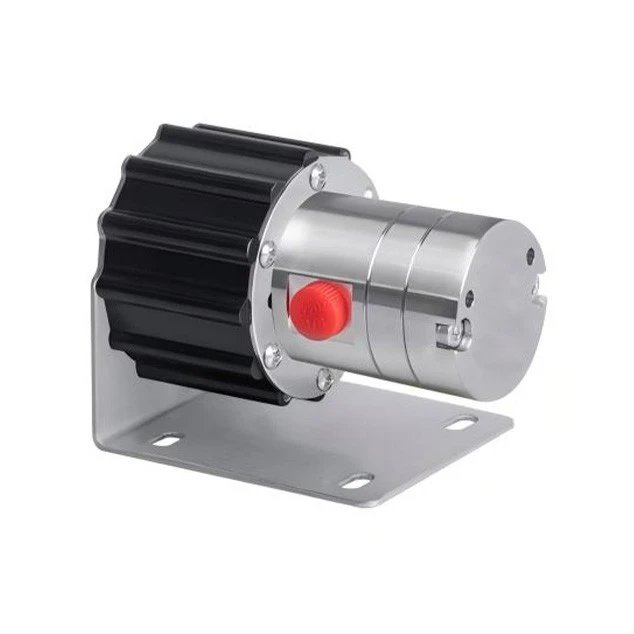
If you’re in the market for a new micro gear metering pump and don’t want to deal with the hassle of picking the wrong one, get in touch with our team. We’ll ask you the right questions (what fluid are you metering, flow rate, pressure needs, etc.) and recommend the exact pump that fits your needs, no pressure, no confusion. Whether you’re a small craft operation or a large-scale processor, we’ve got a solution.
References
- U.S. Food and Drug Administration (FDA). (2023). 21 CFR Parts 170–199: Food and Drugs – Food Contact Substances.
- European Commission. (2004). Regulation (EC) No 1935/2004 on materials and articles intended to come into contact with food.
- International Society of Beverage Technologists (ISBT). (2022). Guidelines for Metering and Transfer Pumps in Food and Beverage Processing.
- Micro Gear Pump Industry Association (MGPIA). (2021). Hygienic Design Standards for Micro Fluid Handling Pumps.