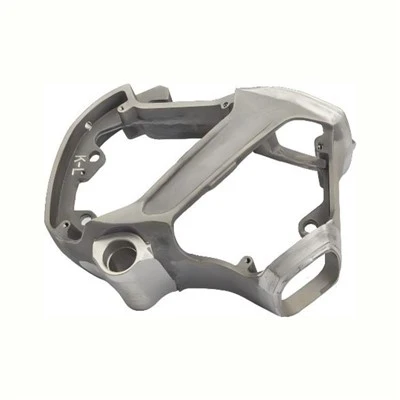


If you’ve ever held a car part, a kitchen appliance component, or even a piece of farm equipment that fits together like a dream, there’s a good chance high-speed CNC machining for die castings played a big role in making it. As a CNC machining of die castings supplier, I get asked all the time what exactly that term means, why it matters so much, and how it’s different from the older, slower ways of shaping metal parts. Let me break this down like I would for a new customer or a friend who’s curious about how the stuff we use every day gets made.
First, let’s start with the basics: die casting itself. Die casting is when you melt metal (usually aluminum, zinc, or magnesium, because they’re lightweight and easy to work with) and inject it under high pressure into a hardened steel mold, called a die. That mold gives you a near-final shape—so you don’t have to carve every little bit of the part from a solid block of metal, which saves time and money. But even with that head start, die castings almost always have a few rough spots, uneven edges, or tiny excess bits of metal (we call those “flash”) that need to be trimmed away. That’s where CNC machining comes in, and “high-speed” is the upgrade that changed everything in the last 15 years or so.
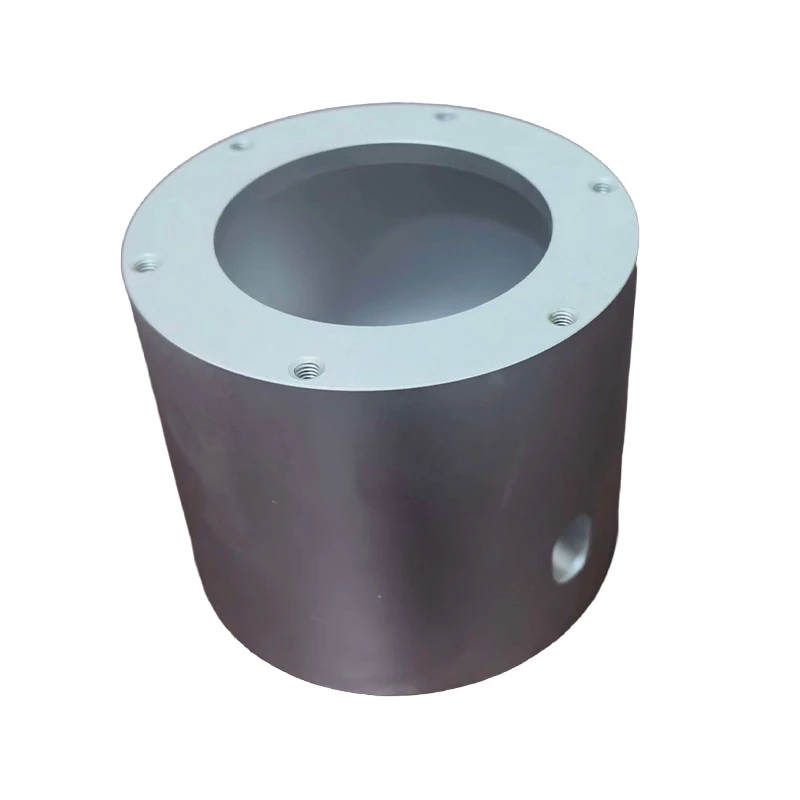
High-speed CNC machining (HSM) for die castings is basically using computer-controlled cutting tools that spin way faster than old-school machines, and move more smoothly, to refine those die-cast parts to tight tolerances—we’re talking thousandths of an inch, here. Back in the day, regular CNC machines would take their time making cuts, which meant parts got hot from friction, warped a little, and sometimes had rough surfaces that needed extra work. High-speed tools spin anywhere from 10,000 to 60,000 RPM, sometimes even higher, and they’re designed to keep the metal cool as they cut. That’s a game-changer for die castings, because most of them are soft or semi-soft alloys that can deform if you rush the cutting too much.
Wait, let me be real with you—this isn’t just “faster cutting.” It’s a whole system. The machines have special spindles, light, rigid frames that don’t vibrate, and computer software that adjusts the tool path in real time so it doesn’t gouge the part or leave uneven edges. For die castings, which are porous sometimes (tiny little air bubbles trapped during the injection process), high-speed machining cuts through that porous layer cleanly instead of tearing it, which makes the part stronger and longer-lasting. I’ve seen parts that would have been scrap on a old machine come out perfect on a high-speed CNC setup, and that’s why more manufacturers are switching to it now.
Let’s talk about why this matters for actual products. If you’re making a component for an electric car, for example, the parts need to fit exactly, weigh as little as possible, and hold up to thousands of miles of vibration. Die casting gets you the light, basic shape, but high-speed CNC machining finishes the critical surfaces—like the holes that bolts go through, the sealing edges for a car’s transmission housing, or the slots that let a part move smoothly. As a supplier, we work with all kinds of clients, from small startups making kitchen gadgets to big aerospace firms, and the demand for precise, durable die-cast parts is only going up because of this process.
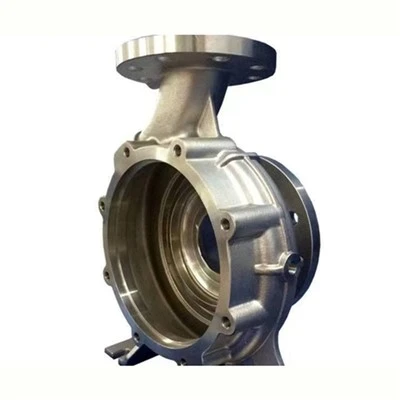
Now, how does this work step by step for a die casting? First, we get the raw die casting from our customer or our in-house die casting team. It’s got the rough shape, flash along the edges, and maybe some extra material where the mold gates (the holes the metal flows through) were. Then we load it into the high-speed CNC machine. The computer is pre-programmed with exact dimensions the part needs—say, a reducer housing that has to fit perfectly inside another component, or a valve body that can’t leak a drop of fluid. The tool spins fast, moving across the part in smooth, small cuts instead of big, rough ones. That small cut is key—if you take a big chunk off at high speed, you’ll vibrate the part, which messes up the tolerance. The software fixes that by adjusting the feed rate (how fast the tool moves) as it goes, so every cut is clean and controlled.
I should mention that high-speed CNC machining for die castings isn’t one-size-fits-all. The tools we use change depending on the metal—aluminum is soft, so we use sharper, faster-cutting tools with less pressure; zinc is a bit harder, so we adjust the spindle speed and feed rate to avoid breaking tools. That’s the stuff we spend years learning, right? When you’re a CNC machining of die castings supplier, you don’t just run a machine—you know how to tweak every setting to get the best part, no matter what the customer needs.
Let’s talk about the benefits that matter to our customers, because that’s what everyone cares about. First, speed: high-speed machines can finish a die casting 2 to 3 times faster than conventional CNC machines, which means lower lead times. If a customer needs 10,000 parts by the end of the month, we can get them done instead of falling behind. Second, better surface finish. Those small, smooth cuts leave a part that’s almost ready to use, no extra polishing needed. That’s huge for parts that have to look good, like consumer electronics casings or appliance handles. Third, tighter tolerances. If you need a part that fits within 0.001 inches (that’s thinner than a human hair) to work, high-speed CNC machining makes that consistent across every part we make. No more parts that fit loose one time and too tight the next.
Wait, but there’s a common misconception I hear all the time: “Is high-speed CNC machining too expensive for small runs?” Yeah, it’s true the machines themselves cost more, but for most customers, the savings add up fast. Less scrap parts because of vibration or rough cuts, less extra work (like polishing or reworking), and faster turnaround mean we can actually offer competitive prices even for small orders. Plus, we have flexible setups so we can switch between different parts quickly, whether you need a single prototype or 100,000 production parts. That’s why so many clients come back to us when they need things like CNC Machined Parts or Mechanical Parts Processing—we can handle both small and big runs with the same precision.
Let me give you a real example from our shop. Last year, a client came to us needing aluminum alloy non-standard parts for a new drone. The die casting was rough, and they needed tiny, precise slots and holes that had to line up perfectly for the drone’s motor to fit. If we had used a conventional CNC machine, those small slots would have taken forever, and we probably would have broken a few tools, leading to scrap parts. With high-speed machining, we finished each part in half the time, the slots were exactly the size they needed to be, and we delivered 5,000 parts on time, no issues. That’s the kind of result high-speed CNC brings to die casting work.
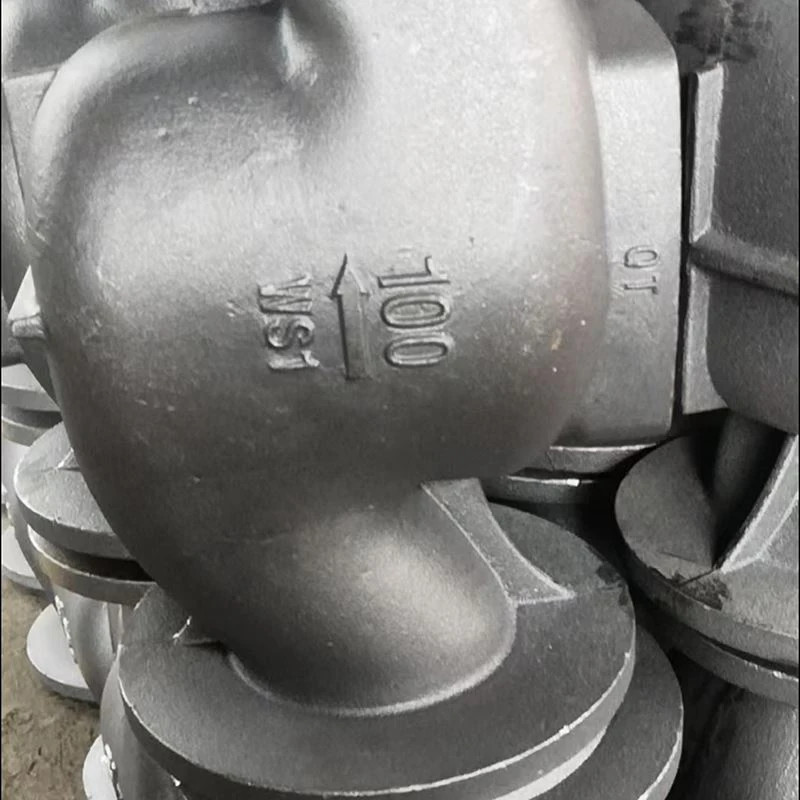
Another example: valve body CNC machining. Valve bodies have to seal fluid or gas, so even a tiny burr or uneven edge can cause a leak, which is a big safety issue. A few years back, we had a customer making hydraulic valve bodies for construction equipment. They were using a conventional CNC setup, and 5% of their parts were getting rejected because of rough sealing surfaces. We switched them over to high-speed CNC machining for their die-cast aluminum valve bodies, and the rejection rate dropped to less than 0.5%. That saved them thousands of dollars in scrap and rework, and they’ve been a repeat client ever since. I love those success stories—seeing how this process actually solves real problems for people building stuff that matters.
Now, let’s talk about what the future holds for high-speed CNC machining of die castings. We’re seeing more automation these days—machines that can load and unload parts on their own, so we can run 24/7 without a person standing there. The software is getting smarter too, using AI to adjust tool paths automatically based on how the part is cutting, which makes adjustments even faster. For die castings, which are only going to get more common as industries like electric vehicles and renewable energy grow, high-speed machining is going to be even more important. Lightweight, durable parts with tight tolerances are non-negotiable for these industries, and that’s exactly what this process delivers.
But let’s not get ahead of ourselves—this work isn’t just about fancy machines. It’s about the people who know how to use them. As a CNC machining of die castings supplier, we spend a lot of time training our team to understand both the die casting process and the CNC machining side. We know what to look for in a raw die casting—little defects that might affect how the machining goes, how to adjust for different alloys, how to make sure every part meets the customer’s specs. That hands-on knowledge is just as important as the high-speed machines themselves.
If you’re a product designer, an engineer, or a business owner looking for parts that are precise, durable, and made on time, high-speed CNC machining for die castings is probably the way to go. It’s not just a newer version of old machining—it’s a process that solves real pain points: slow turnaround, bad surface finishes, inconsistent tolerances, high scrap rates. Whether you need a prototype, a small batch, or mass production, this process can adapt to your needs. We’ve worked with everything from small custom parts to large, complex components like reducer housings, and we know how to tailor our process to get exactly what you need.
I don’t want this to sound like a sales pitch, but I also want to be real: if you’re looking for a partner that knows high-speed CNC machining for die castings inside and out, we’re here. We don’t just cut metal—we problem-solve with you, whether that’s tweaking a tool path, adjusting the settings for a tricky alloy, or getting parts to you when you have a tight deadline. If you’re working on a project and need CNC Machined Parts, Mechanical Parts Processing, Aluminum Alloy Non Standard Parts, Reducer Housing Processing, or Valve Body CNC Machining, reach out to our team to chat about your needs. We can walk you through the process, answer any questions, and give you a clear idea of how high-speed CNC machining can help your project succeed.
Wait, let me make sure I didn’t skip anything. High-speed CNC machining for die castings is the intersection of die casting’s efficient near-net shaping and CNC machining’s precision, boosted by faster tools, better software, and smarter processes. It’s not just about speed—it’s about quality, consistency, and value. Whether you’re a small business owner making a new product or a big company scaling production, this process has changed the game for how metal parts are made. And as a supplier, I’m proud to be part of that, helping bring ideas to life with parts that work well, last long, and are made right.
Before I wrap up, a quick note for anyone who’s still curious: if you want to dive deeper into how this works, we’ve got more info on our site for all the parts we specialize in, so you can check out the details for yourself. Just head over to our pages to see examples of the work we do, from small non-standard aluminum parts to large reducer housings and critical valve bodies. We’re always happy to chat, whether you have a simple question or a complex project that needs a reliable manufacturing partner. Don’t hesitate to reach out to our team to start the conversation.
References
- Campbell, J. (2014). Die Casting Design and Performance. ASM International.
- Tonshoff, H. K., et al. (2000). High-speed machining. Annals of the CIRP, 49(2), 557-575.
- Kalpakjian, S., & Schmid, S. R. (2021). Manufacturing Processes for Engineering Materials (7th ed.). Pearson.
- American Die Casting Association. (2022). High-Speed Machining Best Practices for Die Cast Components. Technical Report.
- Data Bridge Market Research. (2023). Global High-Speed CNC Machining Market for Die Castings: Industry Trends and Forecast to 2030.