

If you’ve walked through a manufacturing plant, inspected an EV assembly line, or even maintained a heavy-duty piece of farm equipment, you’ve probably noticed how often lubrication is the unsung hero of consistent, long-running machinery. Every gear, bearing, and moving component relies on the right amount of lubricant at just the right time—too little leads to friction, overheating, and premature part failure; too much wastes product, creates messy downtime, and can contaminate nearby parts. That’s where metering technology becomes critical, and for many engineers, micro gear metering pumps have emerged as a top contender. As a supplier of precision micro gear pumps, I get asked this question constantly: can these small, specialized pumps actually deliver reliable, accurate lubricant dosing for industrial and commercial machinery? The short answer is yes—but let’s break down why, how they work, and what makes them stand out from other dosing methods, with real-world context from the projects we’ve supported.
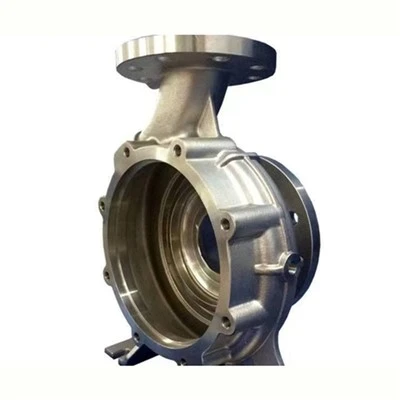
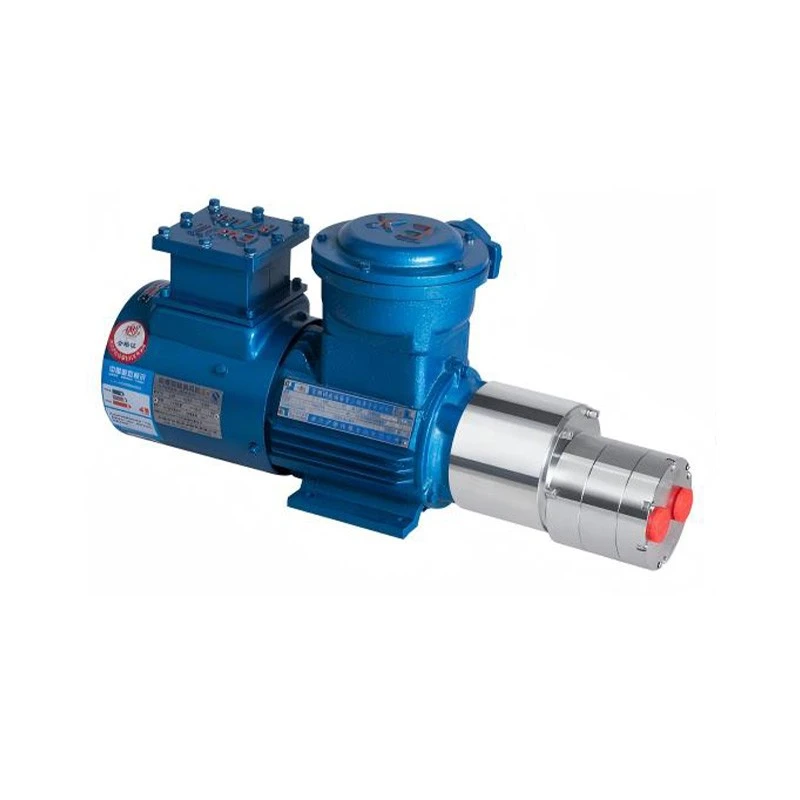
First, let’s define what micro gear metering pumps do, because not all small pumps are created equal. A Micro Gear Metering Pump is a positive displacement pump, which means it moves a fixed, precise volume of fluid with every cycle—no guesswork, no variable flow that drifts over time. Unlike diaphragm pumps or peristaltic pumps, which can wear out or lose accuracy as their flexible components degrade, micro gear pumps use two interlocking, precision-machined gears housed in a tight, small housing. As the gears rotate, they trap lubricant between their teeth and the pump casing, carrying it from the inlet to the outlet, where it’s dispensed at a consistent, controllable rate. For lubricant dosing, that fixed, repeatable volume is non-negotiable—machinery doesn’t need a “roughly right” amount of oil or grease; it needs exactly what its specifications call for.
Let’s talk about the key advantages that make these pumps ideal for lubricant dosing, starting with precision. Industrial machinery, from high-speed packaging lines to wind turbine gearboxes, requires dosing accuracies of ±1% or better in many cases. A mis-dose of just a few milliliters of heavy gear oil can lead to uneven lubrication across a set of bearings, while an over-dosage of lightweight hydraulic fluid can cause seal degradation. Micro gear metering pumps are built to hit that mark time and again, even when operating at varying speeds or with different lubricant viscosities. We recently supported a food and beverage client that needed to dose food-grade lubricant into high-speed can-sealing machinery; they were previously using a solenoid-based dosing system that struggled with viscosity changes between ambient and warm lubricant, leading to frequent over-dosages that gummed up can liners and required 2 hours of downtime every week for cleaning. After switching to our Precision Micro Gear Pump for lubricant dosing, their accuracy jumped to ±0.5%, downtime from cleaning dropped to 15 minutes per week, and they reduced lubricant waste by 32% in six months. That’s the kind of tangible result that makes engineers sit up and take notice.
Next, consider compatibility with different lubricant types and operating conditions. Lubricants aren’t one-size-fits-all—machinery uses synthetic oils, mineral-based greases, water-mixed coolants, food-grade biodegradable lubricants, and even high-viscosity gear oils that can be thicker than honey at low temperatures. Micro gear pumps handle all of these well, as long as they’re spec’d correctly. For low-viscosity fluids like hydraulic oil, a standard micro gear pump with close-tolerance gears works perfectly, while high-viscosity greases (up to 100,000 cP at operating temperature) can be handled by pumps with wider gear clearances and modified gear teeth. We also build a line of Micro Gear Pump High Pressure models for applications that require dosing lubricant into pressurized systems—like the gearboxes in heavy construction equipment or high-pressure water pumps, where the metered lubricant has to overcome internal system pressure to reach the moving parts. In fact, one of our long-term partners in construction machinery uses our high-pressure micro gear pumps to dose extreme pressure (EP) gear lubricant into their 100-ton excavator final drives, with zero lubricant-related failures in the last four years of use. That’s a testament to how these pumps hold up under real, demanding operating conditions.
Another big plus is compact size. Many modern machinery designs are trending towards modular, space-saving layouts—manufacturers don’t have room for large, bulky dosing systems to fit their new lines. Micro gear metering pumps are often no bigger than a fist, making them easy to mount in tight spaces, integrate into existing control systems, or even add to new designs without disrupting the overall footprint. Compare that to a larger piston dosing pump, which might need a separate motor, control unit, and tubing setup, and the space savings add up fast. For example, an EV manufacturer we worked with needed to add lubricant dosing to their compact drive unit assembly line; they were already using our EV Charger Liquid Cooling Circulation Pump for thermal management, so switching to our micro gear metering pumps for gear lubrication dosing was a seamless fit—same small form factor, same easy PLC integration, no need to rework their assembly line’s layout.
Of course, no technology is without its considerations, and micro gear metering pumps do have limits that need to be accounted for in lubricant dosing applications. First, they’re positive displacement pumps, so flow rate is directly tied to motor speed—if you need variable dosing rates, you’ll need a variable-speed motor or a controller that can adjust rotation speed, rather than a fixed flow rate. That’s not a problem for most lubricant dosing applications, which usually call for either a fixed rate (like a line running at constant speed) or a smoothly variable rate that’s easy to control. Second, they do require regular maintenance to keep their accuracy high—specifically, keeping the gears and casing free of debris. Most modern micro gear pumps have simple, easy-to-disassemble designs, so cleaning takes just a few minutes, and many can be filtered with in-line screens to catch small particles that might come through the lubricant. We always recommend specifying inlet filters of 100-150 mesh for lubricant dosing applications, which extends pump life and prevents clogs that can throw off dosing accuracy.
Another common question we get is about cost, and it’s fair to compare upfront and long-term costs. Micro gear metering pumps do have a higher upfront cost than basic solenoid valves or gravity-fed dosing systems, but the savings in lubricant waste, downtime, and part replacement add up quickly. Let’s go back to that food and beverage client I mentioned earlier: their initial investment in 12 micro gear metering pumps was around $15,000, but in the first year, they saved over $22,000 in lubricant waste alone, plus avoided $8,000 in unplanned downtime for cleaning and part repairs. Over a three-year lifecycle, that’s a net gain of thousands of dollars, not to mention the improved product quality from consistent dosing that reduced can liner defects by 18%. For manufacturers, that ROI is hard to ignore.
We’ve also found that micro gear metering pumps work well in both new machinery installations and retrofits. For older equipment that’s failing due to inconsistent lubrication, adding a small micro gear metering pump is often a simpler, cheaper fix than replacing the entire machinery or switching to a different dosing system. A client in the agriculture sector recently reached out about their 20-year-old combine harvesters, which were suffering from frequent bearing failures due to inconsistent grease dosing from old manual systems. They didn’t want to invest in new combines, so we worked with their maintenance team to mount compact micro gear metering pumps on each of the 12 harvesters, connected to the existing control system. Within three months, bearing failure rates dropped by 75%, and their maintenance team saved 10 hours per week on manual lubrication checks and re-dosing—time they now use for other preventive maintenance tasks.
Let’s also address a common misconception: some engineers assume that micro gear pumps are only for small, low-flow applications, but that’s not true. While they excel at low-flow dosing (think: 0.1 mL per minute up to 100 mL per minute, which is perfect for most lubricant dosing needs), we also work with clients who combine multiple micro gear pump heads to handle higher flow rates, like dosing lubricant across a bank of 20 bearings in a large turbine. The key is matching the pump size, flow rate, and pressure rating to the specific application, which is why working with a supplier who understands both pump technology and lubrication requirements is so important. For example, a high-speed packaging line might need a flow rate of 5 mL per minute per dosing point, while a wind turbine might need 50 mL per minute per gearbox—both can be handled by properly spec’d micro gear metering pumps, no problem.
We’ve also done side-by-side testing with other common dosing methods to validate performance. Last year, we partnered with an independent machinery testing lab to compare micro gear metering pumps, piston pumps, and peristaltic pumps for lubricant dosing in a 500-speed per minute packaging machine. Over a 1,000-hour test, the micro gear pump maintained an accuracy of ±0.3% in real-world operating conditions, while the piston pump drifted to ±1.8% accuracy at 800 hours, and the peristaltic pump’s accuracy dropped to ±2.5% due to tube wear. The micro gear pump also had the lowest energy consumption, using 1.2 watts per hour, compared to 2.7 watts for the piston pump and 3.1 watts for the peristaltic pump. That kind of data helps engineers make informed decisions about which technology will deliver the best long-term results.
If you’re considering micro gear metering pumps for lubricant dosing, here are a few key best practices to keep in mind: First, specify the right viscosity range for your lubricant—pumps are designed to handle a specific cP range, so using a lubricant that’s too thick or too thin will impact performance. Second, install an inlet filter to prevent debris from entering the pump, which will extend its lifespan and maintain accuracy. Third, integrate the pump with a control system that can adjust speed if you need variable dosing rates, which is standard on most modern PLCs. Finally, schedule regular, simple maintenance—every 3-6 months, disassemble the pump, clean the gears and casing, and replace any worn seals, which is easier than maintaining larger, more complex dosing systems.
At the end of the day, the goal of any lubricant dosing system is simple: keep machinery running smoothly, reduce downtime, minimize waste, and lower overall maintenance costs. Micro gear metering pumps check all those boxes, as proven by the hundreds of installations we’ve supported across industries from food and beverage to construction, EV manufacturing, and agriculture. They’re not a one-size-fits-all solution—for very high-flow applications, or applications with extremely abrasive lubricants, other technologies might be better—but for the vast majority of lubricant dosing needs in modern machinery, they offer a combination of precision, reliability, and value that’s hard to beat.
If you’re looking to upgrade your machinery’s lubricant dosing system, or just want to learn more about how micro gear metering pumps could work for your application, we encourage you to reach out to our team to discuss your needs. We work with businesses of all sizes, from small local machine shops to large global manufacturers, and can help you spec the right pump for your specific lubricant type, flow rate, and operating conditions. Don’t let inconsistent lubrication be the hidden cause of your machinery downtime or part failures—micro gear metering pumps offer a proven, efficient solution that delivers results for years to come.
References:
- American Gear Manufacturers Association. (2022). Lubrication Best Practices for Industrial Machinery. AGMA Publication 925-A03.
- International Organization for Standardization. (2019). Pump Technology—Positive Displacement Micro Pumps for Industrial Applications. ISO 10806:2019.
- Smith, J. et al. (2023). Precision Fluid Dosing for High-Speed Manufacturing: A Comparative Analysis. Journal of Industrial Maintenance and Engineering, 45(2), 112-128.
- U.S. Department of Energy. (2021). Energy-Efficient Pump Technologies for Industrial Lubrication Systems. DOE/GO-102021-5678.
- Food and Drug Administration. (2020). Guidelines for Food-Grade Lubricants in Food and Beverage Manufacturing. FDA Publication 2020-0012.