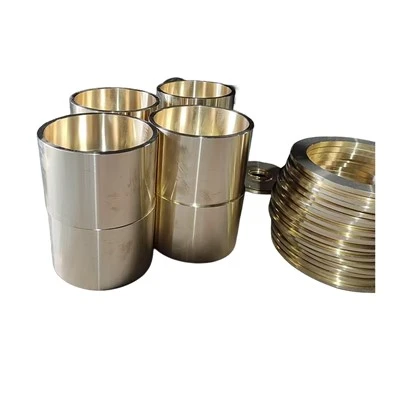


If you’ve ever watched a heavy-duty conveyor belt hum along a production line, or a construction crane swing smoothly to lift tons of steel, you’ve probably relied on a small, unassuming part that does most of the work out of sight: the copper alloy bushing. As a supplier of these critical components, one of the most common questions I get from engineers, maintenance managers, and product designers is also one of the most important: What is the fatigue life of copper alloy bushings? The answer isn’t a simple number—it depends on a mix of material choice, operating conditions, design, and manufacturing quality, but getting it right can mean the difference between months of unplanned downtime and years of reliable performance.
First, let’s ground this in what fatigue life actually means for a bushing. Unlike static loads, which are constant, fatigue life refers to the number of repeating load cycles a part can withstand before it develops a crack, wears unevenly, or fails catastrophically. For bushings, which function as plain bearings to reduce friction between moving metal parts, fatigue most often comes from cyclic shear forces, repeated contact stress, and occasional shock loads that build up over time. It’s not just about how hard the bushing is pressed; it’s about how often that pressure changes, and how the material responds.
The biggest factor influencing a copper alloy bushing’s fatigue life is the specific copper alloy used. Not all copper is the same, and choosing the wrong alloy for an application is a costly mistake I’ve seen more times than I can count. For high-stress, low-speed applications like heavy equipment pivot points, we often turn to tin bronzes—alloys like C90500, which has high tensile strength and good wear resistance, making it ideal for sustained cyclic loads. C90500 bushings typically show a fatigue limit (the maximum stress a part can endure indefinitely without failing) around 25,000 to 30,000 psi, which translates to a very long fatigue life if operating within that limit. For higher-speed, lower-load applications, like the idler wheels on a packaging line, leaded bronzes like C93200 (also called SAE 660) are more common. They have better machinability and self-lubricating properties, and their fatigue limit hovers around 20,000 to 25,000 psi, still more than enough for most industrial conveyor or automation uses.
When applications involve extreme temperatures or corrosive environments—like a marine pump shaft or a chemical processing mixer—we use more specialized alloys, like aluminum bronze (C95400) or silicon bronze. Aluminum bronze has outstanding corrosion resistance and can handle temperatures up to 500°F, and its fatigue limit jumps to around 35,000 psi, making it one of the best options for heavy cyclic loads in harsh conditions. Silicon bronze, while a bit less strong, has excellent resistance to saltwater and chemical corrosion, so it’s a go-to for marine components where fatigue life has to pair with durability against the elements.
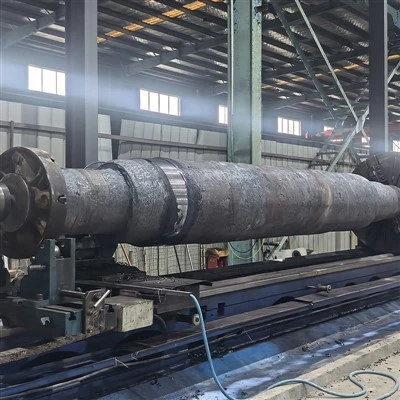
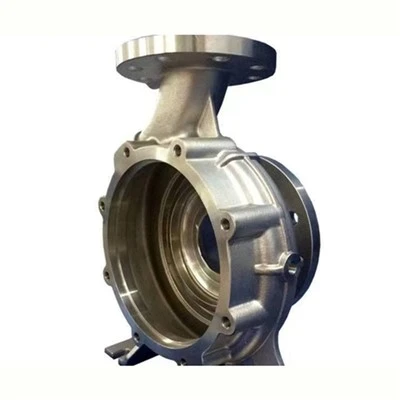
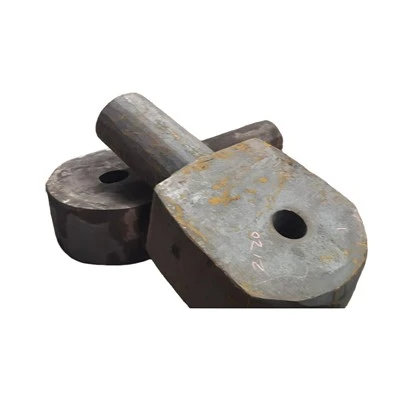
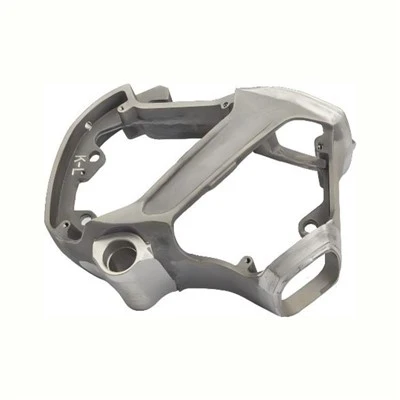
Of course, the material is only half the equation. How the bushing is made, and how it’s machined, plays a huge role in its fatigue life. That’s why we invest so heavily in precision manufacturing at our facility. A rough, poorly machined bushing with sharp edges or surface imperfections is far more likely to develop a fatigue crack at the point of a stress concentration, even if it’s made from the same high-quality alloy as a smoother, better-finished part. We also offer both Copper Alloy Precision Castings and Copper Alloy Machined Parts tailored to bushing needs, because the casting method and final machining process directly impact fatigue life. For example, sand-cast bushings can have small, hidden voids inside the material that act as stress raisers, so for high-fatigue applications, we often use centrifugal casting, which produces denser, more uniform material with fewer internal defects, boosting fatigue life by as much as 30% compared to standard sand casting.
Surface finish is another often-overlooked detail. Our precision-machined bushings go through a final finish step that leaves a Ra (average roughness) of 0.8 to 1.6 micrometers, which is smooth enough to reduce friction and eliminate the tiny scratches or tool marks that would otherwise start a fatigue crack. For parts operating in very high-cycle applications, like electric motor bearings that cycle thousands of times a minute, we can also offer surface treatments like burnishing or tin plating to further improve wear and fatigue resistance.
Once the bushing is installed, the operating conditions will define how its actual fatigue life compares to its rated value. Let’s break down the key variables here. First, load magnitude and type. Static overloads, even occasional ones, can drastically reduce fatigue life. A bushing rated for 20,000 psi working stress might only last a third as long if it’s regularly subjected to 50,000 psi shock loads, like from a dropped load on a crane or a sudden stop in a packaging line. That’s why we always work with our customers to calculate the expected dynamic load, not just the maximum static load, when recommending a bushing.
Next, speed and cycle frequency. For high-speed applications, cyclic loads happen much more often, so fatigue life is measured in hours of operation rather than years. A bushing in a low-speed conveyor that cycles 10 times a minute might last 10 years at its rated load, while a bushing in a 1,800 RPM electric motor could face over 100 million cycles a year. For these high-cycle applications, we help engineers adjust design parameters—like increasing the bushing’s wall thickness, using a higher-strength alloy, or adding lubrication—to extend fatigue life. Lubrication might seem like it’s only about reducing friction, but it also prevents surface pitting, a common form of fatigue failure in bushings where repeated contact causes tiny cracks that grow over time. Proper lubrication can double or even triple the fatigue life in high-speed applications.
Temperature also matters a lot. Copper alloys hold up well at moderate temperatures, but as temperatures go above 300°F, their tensile strength starts to drop, which lowers fatigue life. For example, C90500 tin bronze loses about 10% of its strength at 500°F, so its fatigue limit falls from 28,000 psi at room temperature to around 25,000 psi at that temperature. For high-temperature environments, our aluminum bronze alloys hold their strength much better, making them the better choice. On the flip side, extremely low temperatures (below -100°F) can make some copper alloys brittle, so we adjust material selection for cryogenic applications as well.
Contamination and environment are the final big operating factors. Dust, dirt, or debris in a system can act like abrasive grit between the bushing and the mating shaft, causing wear and creating stress points that accelerate fatigue. In corrosive environments, like factories with high humidity or exposure to chemicals, the bushing’s surface can corrode, leading to tiny pits that become fatigue crack initiators. That’s where our specialized corrosion-resistant alloys, like aluminum bronze and silicon bronze, really shine, and we also offer custom coating options for extra protection if needed.
To give a concrete example of how this all comes together, let’s look at a common real-world application: a mining conveyor belt idler bushing. These bushings operate at low speed (around 10 RPM) but carry extremely high dynamic loads from the weight of the belt and ore, plus occasional shock loads from dropped rocks. We recommend a C90500 tin bronze bushing, centrifugally cast for density, precision machined to a smooth finish, and paired with a grease lubrication system. For this application, the rated fatigue life is around 50 million load cycles, which translates to about 7 to 10 years of continuous operation, well within the typical lifespan of a mining conveyor system. Compare that to a cheaper, sand-cast C93200 bushing for the same application: its rated fatigue life might be half that, around 25 million cycles, leading to frequent replacements and unplanned downtime.
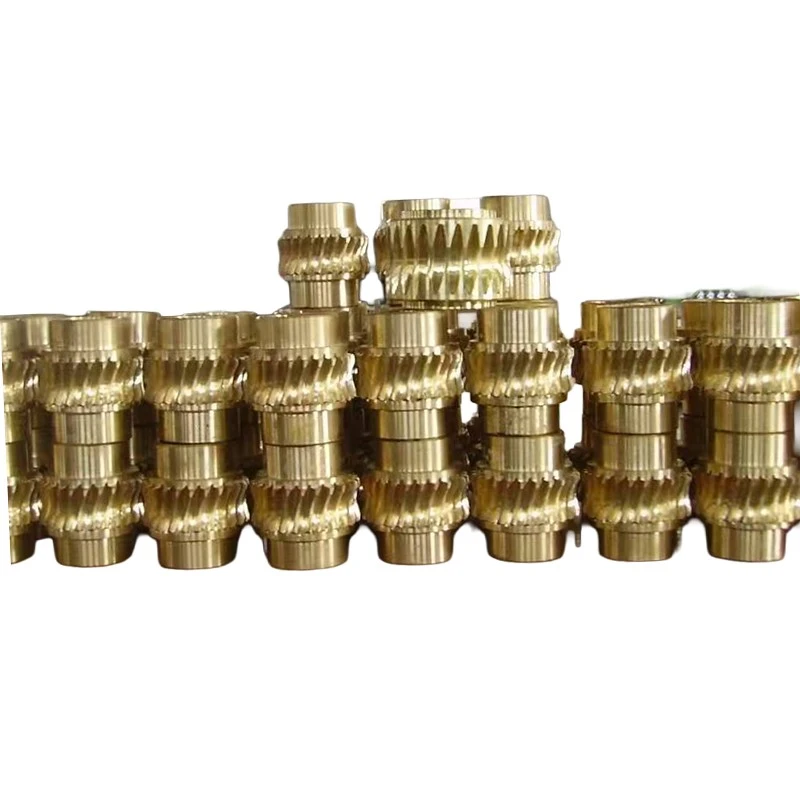
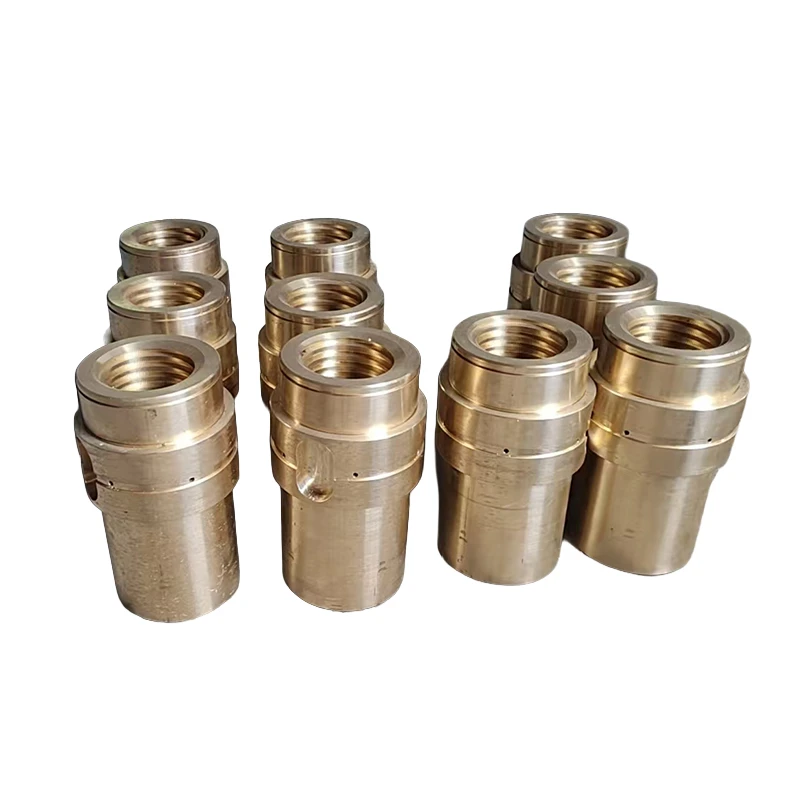
As a supplier of quality components, we don’t just sell Copper Alloy Bushings—we work with our customers to make sure their bushings are suited to their specific application, so they get the maximum possible fatigue life. That means taking the time to talk through operating loads, speed, temperature, and environment, not just sending a standard part off the shelf. We also provide testing and validation for custom applications, including fatigue testing of prototype bushings under real-world load cycles, to give our customers concrete data on how their bushing will perform.
I’ve seen too many projects go wrong because someone cut corners on bushing material or manufacturing, leading to premature failure, production halts, and extra replacement costs. The fatigue life of a copper alloy bushing isn’t a random number—it’s a product of material science, precision manufacturing, and matching the part to the job. If you’re designing a new system, troubleshooting a failing bushing, or looking to upgrade your components to reduce downtime, I’m here to help. We’ve worked with everything from small custom automation projects to large-scale industrial facilities, and we can help you find the right copper alloy bushing to meet your fatigue life and performance needs. Reach out to our team to start the conversation about your application, and let’s make sure your parts last as long as they need to.
References
- ASM International. (2019). Fatigue of Copper Alloys. In Copper and Copper Alloys: Processing, Properties, and Applications. ASM International.
- Kennedy, F. E. (2005). Plain Bearings (Bushings) for Industrial Applications. Wear, 258(9), 1366-1375.
- Society of Automotive Engineers (SAE). (2021). Standard J437: Copper Alloy Castings for Bearings and Bushings. SAE International.
- Dieter, G. E. (1986). Mechanical Metallurgy (3rd ed.). McGraw-Hill.