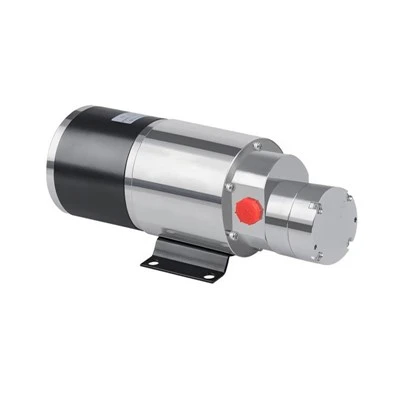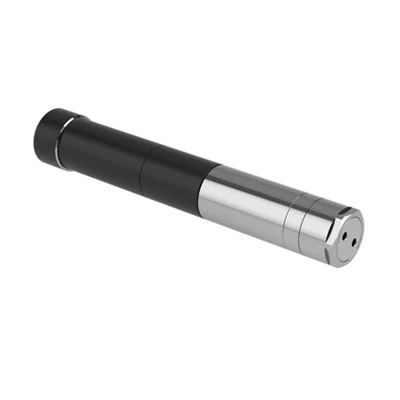

As precision machinery, industrial automation, and compact equipment continue to advance, micro gear pumps are becoming increasingly common in lubrication, hydraulic, cooling, coating, and fluid-control systems. Depending on their mechanical configuration, drive method, and intended application, micro gear pumps can be designed in several different forms. Each design offers characteristics that make it suitable for particular operating conditions.
Based on gear configuration, micro gear pumps are generally divided into external gear pumps and internal gear pumps. External gear pumps use a pair of intermeshing gears to move fluid through the pump housing. Their relatively straightforward construction makes them practical for a wide range of fluid-transfer and circulation applications, while also simplifying manufacturing and maintenance. Internal gear pumps use an inner and outer gear arrangement. Their operating characteristics can provide smooth fluid transfer and make them suitable for applications where flow consistency and reduced operating noise are important considerations.
Micro gear pumps can also be categorized according to their drive systems. Common configurations include motor-driven and DC-powered designs, along with customized drive solutions for specialized equipment. Motor-driven pumps are often integrated into automated machinery, where pump speed can be adjusted to match changing system requirements. DC-driven models offer flexible control and can be useful in portable equipment, compact instruments, and applications with specific power-supply requirements.
The type of fluid being handled is another important consideration. Micro gear pumps may be used with lubricating oils, hydraulic fluids, coolants, and other liquid media. These fluids can differ significantly in viscosity, temperature range, and chemical properties. As a result, the choice of pump materials, gear materials, and sealing components may need to be adapted to the characteristics of the working medium.
Selecting a micro gear pump should involve more than simply matching its physical dimensions to the available installation space. Flow rate, operating pressure, rotational speed, fluid viscosity, temperature, material compatibility, and installation conditions all need to be considered. Choosing a suitable pump configuration can help improve overall system efficiency, reliability, and service life.
With continued advances in precision manufacturing and automation technology, micro gear pumps are expected to become smaller, quieter, more precise, and more reliable. These improvements will create further opportunities for their use in compact machinery and advanced fluid-control systems.